
The Absolute Duties of the King of Hawaiʻi
Posted: December 2, 2025
From the desk of the KING:
The King’s Duties: Absolute, Sacred, and Comprehensive
The proclamation reaffirms the absolute duties of the Hawaiian King—spanning law, governance, military command, and the sacred stewardship of Hawaiʻi’s holy sites—while grounding the Kingdom’s sovereignty in historical and legal truth.
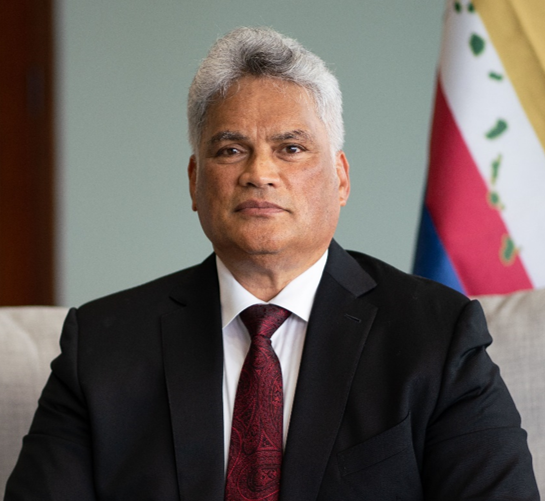
The Hawaiian Kingdom stands upon a foundation of ancient sovereignty, spiritual law, and a historical record that affirms the enduring authority of the Ka Moʻi—the King. A newly issued proclamation from His Majesty King Edmund Keliʻi Paki-Silva II reasserts this legacy, clarifying the absolute nature of the King’s duties, the legal history of the Kingdom, and the sacred responsibility entrusted to the Hawaiian monarch.
A Sovereignty Rooted in Law and History
Long before Western powers reached the Pacific, the Hawaiian Kingdom—unified in 1810 under Kamehameha the Great—exercised complete sovereignty over its archipelago. This sovereignty was later challenged by colonial doctrines such as the Doctrine of Discovery, enforced into U.S. law through the 1823 Supreme Court decision Johnson v. M’Intosh. These doctrines attempted to legitimize the dispossession of indigenous lands under European “discovery.”
The proclamation highlights how these colonial laws contradicted both Hawaiian sovereignty and international principles of justice. In a historic shift, the Vatican formally repudiated the Doctrine of Discovery in 2023, acknowledging its destructive impact on Indigenous nations—further underscoring the Hawaiian Kingdom’s rightful status as an independent nation.
The Kingdom reasserted this status through the reestablishment of its sovereign government on November 22, 2002.
Executive Agreements and the Legal Mandate to Restore the Kingdom
An essential part of the Hawaiian Kingdom’s legal foundation rests on the Cleveland–Liliʻuokalani Executive Agreements of 1893. President Grover Cleveland, upon recognizing the unlawful overthrow of the Hawaiian Kingdom, entered directly into two binding agreements with Queen Liliʻuokalani:
- The Liliʻuokalani Assignment
- The Agreement of Restoration
Under U.S. constitutional law—reinforced in U.S. v. Belmont, U.S. v. Pink, and American Insurance Association v. Garamendi—executive agreements are treated as binding treaties. Cleveland’s order to restore the Kingdom was therefore lawful, constitutional, and mandatory.
Despite this, the incoming administration and Congress ignored the agreement, violating both U.S. and international law. This unresolved breach continues to raise critical legal and moral questions that support the Kingdom’s ongoing pursuit of rightful restoration.
The King’s Duties: Absolute, Sacred, and Comprehensive
The proclamation affirms that the Ka Moʻi exercises absolute authority—a traditional governance structure established long before Western influence. The King’s duties span the full functions of a sovereign head of state:
1. Legislative Authority
The King creates laws, approves or vetoes legislation, and guides the Kingdom’s constitutional direction.
2. Executive Leadership
He appoints or dismisses ministers, governors, judges, and officials; oversees all ministries; and directs national governance.
3. Judicial Authority
As the highest judge, the King upholds justice, ensures legal integrity, and resolves disputes within the kingdom.
4. Military Command
The King is Commander-in-Chief, responsible for national defense and the protection of the Hawaiian people.
5. Diplomatic and International Role
The King advances peace, supports Indigenous rights, and guides foreign relations rooted in respect, justice, and lawful governance.
6. Sacred Religious Stewardship
The King is not only a political leader but also a guardian of the spiritual foundations of the Kingdom, upholding divine law and cultural continuity.
Guardian of the Wahi Pana: Hawaiʻi’s Sacred Sites
Another core responsibility of the Ka Moʻi is the stewardship of the wahi pana—the sacred places across the Hawaiian archipelago. These include ancient heiau, birthstones of royalty, volcanic craters, and revered landscapes tied to ancestral memory and spiritual practice.
Notable sites include:
- Ahuʻena Heiau – former royal residence of Kamehameha I and one of Hawaiʻi’s most sacred temples.
- Puʻukoholā Heiau – built by Kamehameha the Great as part of the unification prophecy.
- Kūkaniloko Birthstones on Oʻahu – birthplace of the highest-ranking aliʻi.
- Haleakalā, Maunakea, Puʻu Loa Petroglyph Fields, and others that embody centuries of spiritual significance.
The proclamation reaffirms that the King is the rightful custodian of these holy places, responsible for protecting spiritual traditions and cultural heritage.
An Enduring Legacy and a Continuing Restoration
The proclamation closes by affirming the unbroken legacy of the Hawaiian Kingdom—rooted in divine law, historical truth, and internationally recognized legal principles. The duties of the King are absolute because they arise from ancestral authority, sacred responsibility, and sovereign obligation to the Hawaiian people.
The Kingdom of Hawaiʻi continues to assert its rightful place as an independent nation, guided by its monarch and supported by a legal record that demands recognition, restoration, and respect.
Post Category: King | Post Tags: Aliʻi Nui Mō‘ī Edmund Keliʻi Paki-Silva II, King Edmund K. Paki-Silva II, King Edmund K. Silva II, King of Hawaii, Kingdom of Hawaiʻi, Kingdom of Hawaii