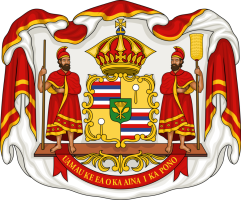

“The Sovereign Mandate of Peace” treats peace as something far sturdier than a pause between conflicts. Its core claim is that peace is a universal birthright—sacred in origin and essential for human flourishing—rather than a privilege handed out by the powerful or a temporary political arrangement.
The document then defines what “real peace” looks like. First, peace is not limited by social categories. It’s not reserved for a particular race, class, religion, or nation. If peace is selective, it’s not peace—it’s preference dressed up as virtue. Second, peace is active creation. It’s not simply the absence of fighting; it’s the deliberate building of conditions where people can thrive, anchored in justice and compassion. Third, it reframes strength: the strongest peace is not passive or naïve, but disciplined—rooted in non-violence, restraint, and the defense of basic human rights.
One of the most useful ideas here is the insistence that peace must be both internal and external. A tranquil heart matters, but so do the structures around us: families, communities, institutions, and nations. The document refuses the common split between “personal peace” and “social peace,” arguing they are intertwined and mutually reinforcing.
Finally, the manifesto grounds its argument in faith and natural law language, describing peace as aligned with divine intent and Creator-endowed rights—something no earthly authority can legitimately revoke. It also nods to the “right to peace” as a human-rights concept, positioning peace as foundational: if peace collapses, other rights become fragile in practice.
The closing message is blunt and challenging: peace is not a slogan, a strategy, or a negotiable ideal. It’s a standard. If we accept that, the next question isn’t “Do we want peace?” but “What are we willing to change to build it?” That can start small—how we speak, how we repair relationships, how we treat the vulnerable—and expand outward into the choices we support in our communities. Peace, in this document’s framing, is a crown: it belongs to everyone, and it must be protected like it does.
2026.02.03.The-Sovereign-Mandate-of-Peace

Very good i like it